


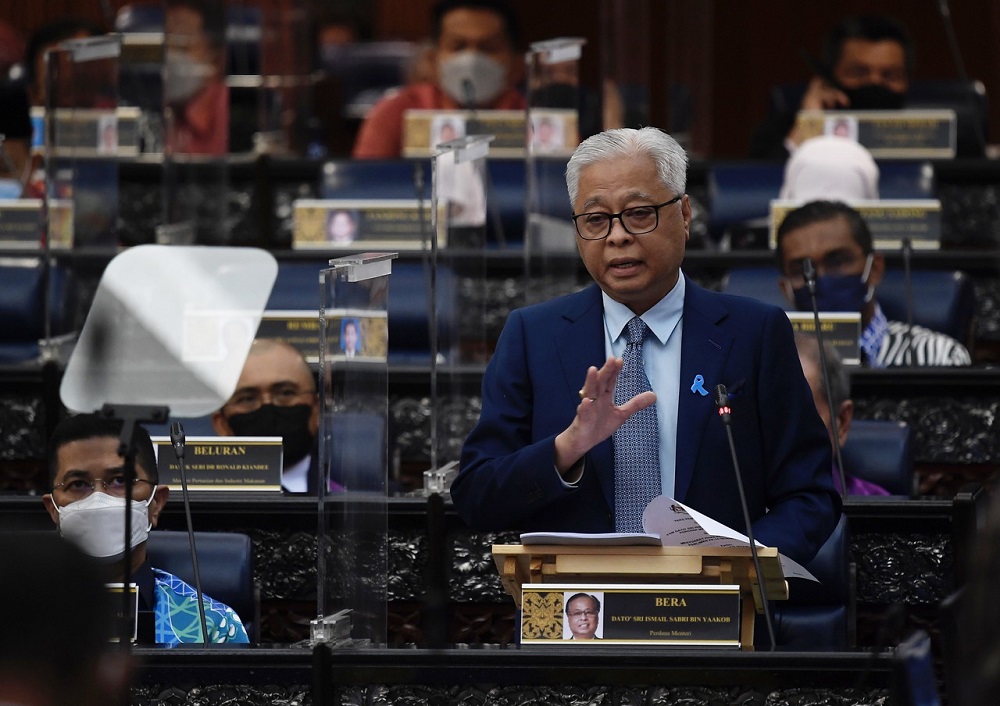
Prime Minister Datuk Seri Ismail Sabri Yaakob speaks at the special meeting of the fourth term of the 14th Parliament in Kuala Lumpur January 20, 2022. ― Bernama pic
KUALA LUMPUR, Jan 20 ― The government has identified three main challenges in flood management which must be quickly improved, including in the understanding of the National Security Council (MKN) Directive No.20.
Prime Minister Datuk Seri Ismail Sabri Yaakob said this was because there were weaknesses among the relevant agencies at the national, state and district levels, as well as among the statutory bodies, public sector and non-governmental organisations, in understanding their roles and responsibilities under the MKN directive for the period before, during and after a disaster.
“Close cooperation between these parties, including the state governments and local authorities, is vital to ensure the efficiency of national disaster management is at the optimal level,” he said when tabling the papers on the flood disaster which occurred at the end of last year at the Special Meeting of Dewan Rakyat here today.
Ismail Sabri said the government had also identified weaknesses in command and control with the absence of the National Disaster Management Agency (Nadma) at the state and district levels, hence making it difficult to coordinate directly with the agencies in the field.
The MKN Directive No. 20 is related to policy and mechanisms of national disaster management that underlines the roles and responsibilities of each Disaster Management Committee at every level.
The Prime Minister said the existing organisational structure also limited Nadma’s ability to coordinate disaster management actions involving local residents, non-governmental organisations and local authorities.
He said these constraints had made it impossible for Nadma to directly manage disasters at the state and district levels.
In addition, he said there was also a weakness in managing and collecting information related to disaster management, which was still being done in a conventional manner and not in line with current technological developments.
Ismail Sabri said this had also caused significant weaknesses in report, analysis, decision-making and data management processes.
“Dissemination of information to response teams and agencies, as well as flood victims, still need to be improved,” he said. ― Bernama