

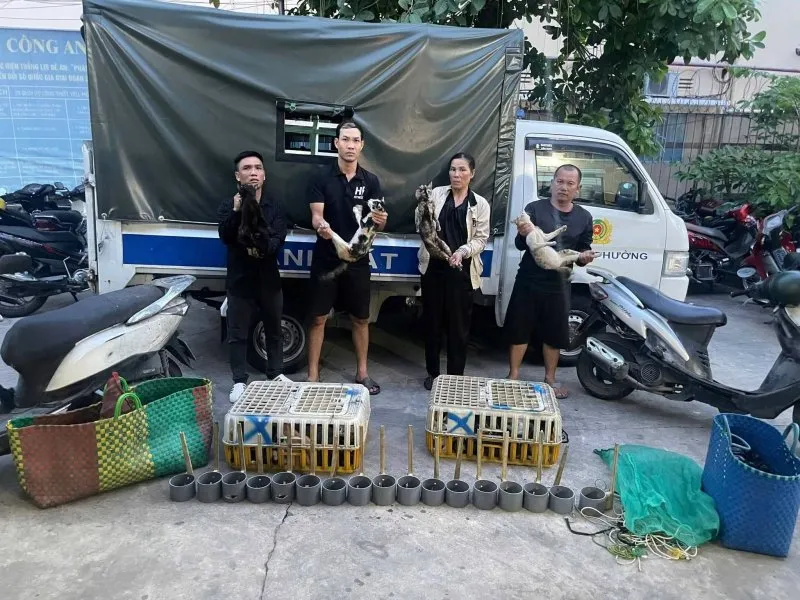
Police exhibit stolen pets in Ho Chin Minh City. — Picture via Facebook
Stay updated on the latest news and insights. Subscribe to our newsletter here
 Make Malay Mail your preferred source on Google Giving you news that matter to Malaysians. Make Malay Mail your preferred source when you search for news on Google.
 Giving you news that matter to Malaysians. Make Malay Mail your preferred source when you search for news on Google.
By Malay Mail
First Published: Friday, 27 Nov 2026 11:07 AM MYT
Last Modified: Friday, 27 Nov 2026 11:18 AM MYT
HANOI, Nov 27 — On the dusty fringes of the Vietnamese capital, Kieu Minh Phuong walks along rows of rusted wire cages, peering into crowded pens filled with animals awaiting an uncertain fate as either household companions or restaurant ingredients.
The 40-year-old ceramics trader is searching for Dom, a nine-year-old calico cat he nurtured from infancy before she disappeared overnight. His search led him to this open-air depot after he read accounts across online neighbourhood forums, where distraught owners frequently recount tracking their stolen companions to roadside animal markets, according to a Reuters report.
“There is a high chance that Dom was stolen,” Phuong said, convinced of foul play after several neighbours reported pets missing in the very same nocturnal sweep.
Phuong’s grief reflects an escalating cultural friction across Vietnam, where a burgeoning culture of companion animal care is colliding with a deeply entrenched, legally sanctioned meat trade. While pet snatching constitutes larceny under domestic property law, trading, butchering, and serving cat and dog meat remains entirely permissible. This regulatory contradiction has fostered organised theft syndicates, with roving crews combing residential alleys on motorbikes after midnight, utilizing adhesive tape and improvised stun devices to snatch family pets before owners can react.
State media reports highlight the industrial scale of the racket. Recent operations in Ho Chi Minh City dismantled an operation accused of trapping 2,700 felines for provincial abattoirs, while police in Hanoi arrested five men caught with over 300 animals. The illicit trade thrives on compelling financial incentives: live dogs fetch roughly US$1.50 per kilogram, while live cats command nearly US$5 per kilogram, lucrative windfalls in an economy where entry-level wages hover below a dollar an hour.
For older generations and blue-collar workers, the cuisine remains tied to custom and folklore, with traditional beliefs suggesting the meat enhances vitality or dispels misfortune.
“Cat meat is a favourite dish for working-class people,” explained Tran Thanh, a 50-year-old truck driver from Haiphong. “Mostly people of my age or older keep the habit,” he said, noting that an informal hot-pot feast shared among coworkers provides unique culinary appeal. “We choose cat meat instead of pork or chicken because it goes well with rice wine.”
Animal protection groups such as Four Paws International estimated in 2020 that over six million dogs and cats enter Vietnam’s slaughterhouses each year. Yet commercial appetite is experiencing a steady generational decline, dampened by municipal rabies advisories and shifting domestic values among younger city dwellers.
“Young people nowadays keep dogs indoors and treat them like members of the family,” observed Tran Huu Thanh, who shuttered his long-running dog-meat diner in 2019 following an unsustainable collapse in patronage.
Municipal authorities in Hanoi have also stepped in with vocational transition grants, successfully assisting 28 trade-related businesses to pivot into mainstream commercial sectors over the past year.
Although livestock regulations require traders to document animal origins, enforcement at wet markets remains virtually non-existent, leaving overloaded welfare shelters to stem the bleeding. At the SNNC Rescue Centre, volunteers regularly pool personal contributions to outbid abattoir middlemen and intercept transport cages, though severe resource constraints and an existing sanctuary population of 1,400 animals have forced the shelter to curtail new rescue missions.
Four weeks after Dom disappeared, Phuong continues to comb clandestine digital marketplaces where animal traffickers post photos of snatched pets, seeking extortionate payouts from owners desperate for their return.
“Dom was my emotional support,” he said quietly. “The house is empty without her.”