


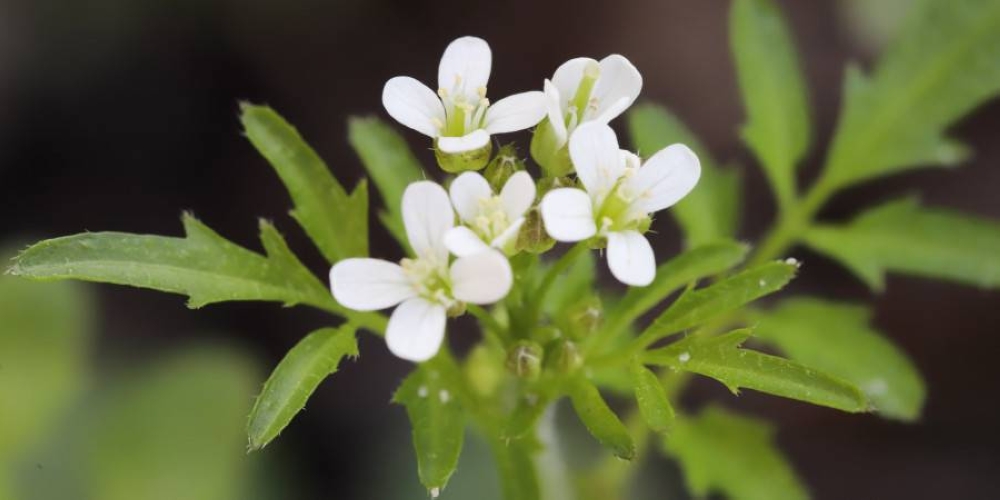
For protection against drought or flooding, certain plants, such as Arabidopsis, naturally secrete an acid comparable to aspirin. — Photography Mantonature / Getty Images via ETX Studio
Follow us on Instagram, subscribe to our Telegram channel and browser alerts for the latest news you need to know.
NEW YORK, July 21 — To protect themselves against drought or flooding, some types of plants naturally secrete an acid comparable to aspirin. This surprising process could pave the way for exploring new means of protecting other types of plants from the effects of climate change.
Is salicylic acid the answer to protection from water stress? This is the substance (comparable to aspirin) that some plants are able to create, as demonstrated by a study published in Science Advances. To reach these conclusions, US researchers at the University of California, Riverside (UCR) studied a model plant called Arabidopsis, often considered a weed.
The team of scientists found that during prolonged and intense episodes of drought, the plant studied activates a molecule known as MEcPP. The accumulation of this molecule in the plant’s cells favours the production of salicylic acid, which will then spread and deploy its protective actions. “It’s like plants use a painkiller for aches and pains, just like we do,” said Wilhelmina van de Ven, UCR plant biologist and co-first study author.
“Because salicylic acid helps plants withstand stresses becoming more prevalent with climate change, being able to increase plants’ ability to produce it represents a step forward in challenging the impacts of climate change on everyday life,” said Katayoon Dehesh, senior paper author and UCR distinguished professor of molecular biochemistry.
The researchers hope to discover more about the mechanism of stress reactions in this type of plant and to be able to apply this knowledge to other plants, in particular those cultivated for food. “Those impacts go beyond our food. Plants clean our air by sequestering carbon dioxide, offer us shade, and provide habitat for numerous animals. The benefits of boosting their survival are exponential,” Katayoon Dehesh explains. — ETX Studio