


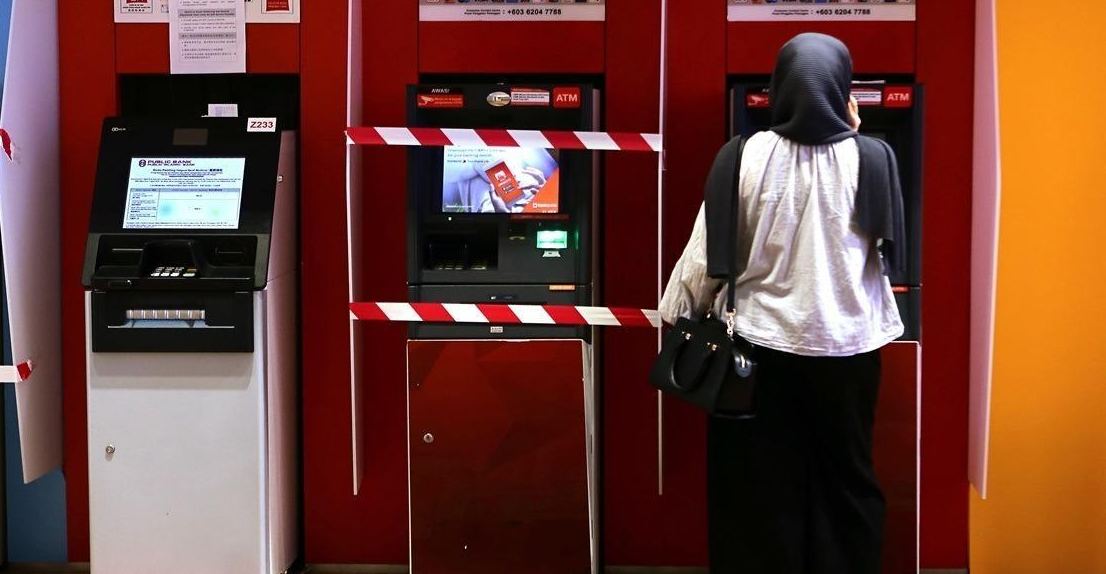
With the introduction of an opt-in blanket moratorium effective July 7, 2021, m-o-m loan repayments saw a 2.2 per cent drop as individuals cling on for more cash liquidity. — Bernama photo
KUCHING: The banking sector’s July 2021 numbers reflect the prevailing damage that movement controls and restrictions could inflict on the overall economy and could lead to a compounding impact if there are extended excessively.
The research arm of Kenanga Investment Bank Bhd (Kenanga Research) recapped that year on year (y-o-y), system loans increased by 3.1 per cent and this stemmed mostly from household loans (up 4.2 per cent) to fuel private vehicle and property purchases.
“Business loans meanwhile only grew by 1.7 per cent as sectors saw mixed restrictions which made operations and expansion difficult,” the research arm gathered.
“Month on month (m-o-m), total loans was almost flattish at 0.1 per cent for both household and business loans, which was understandable given restrictive full movement control order (FMCO) implementations.
“Additionally, with the introduction of an opt-in blanket moratorium effective July 7, 2021, m-o-m loan repayments saw a 2.2 per cent drop (-4.7 per cent in household and-1.5 per cent in businesses) as individuals cling on for more cash liquidity. “
For now, the research arm has reiterated its current year 2021 (CY21) system loans growth expectation at three to four per cent with the steady re-opening of economic sectors with hopes of more liberal nationwide activities when all states migrate to Phase 2 of the FMCO.
“This is encouraged by the high vaccination rates so far, with 63.6 per cent of the total population being completely vaccinated.”
According to Kenanga Research, loan applications “smacked down”, with declines of 28 per cent y-o-y and 15 per cent m-o-m.
“Due to the same abovementioned reasons, households and businesses faced severe difficulties in seeking out loans, and possibly with the trying business climate disincentivising further operations.
“This cascaded to lower loan approvals (-16 per cent y-o-y, -11 per cent m-o-m).”
Meanwhile, Kenanga Research gathered that in July 2021, total impairments reported a 20 per cent y-o-y growth, heightened by both household (up 37 per cent) and business (up 11 per cent) loans.
“Household defaults are likely stirred by those with lost income sources while businesses suffered due to unsustainable operating environments that impeded sales.
“In terms of gross impaired loan (GIL) ratio, overall the month registered at 1.67 per cent, up five basis points (bps) m-o-m, with household coming in at 1.18 per cent (up seven bps) and businesses at 2.36 per cent (up one bps).
“That said, banks are continuously keeping their buffers high, coming in with a loan loss coverage ratio of 111.5 per cent (June 2021: 111.9 per cent, July 2020: 95.5 per cent) to prepare room in the event of further worsening.”
On current account saving account (CASA), Kenanga Research noted that it was stable in July 2021 at 30.3 per cent of total deposits, which increased by 4.5 per cent y-o-y with a slight 0.5 per cent m-o-m boost.
“Possibly due to movement restrictions, consumers are less able to capitalise on their excess cash which were hence left dormant.
“Meanwhile, other interest-yielding accounts could appear less appealing given the suppressed interest returns at present.”
For CY21, Kenanga Research anticipated deposits growth to ease to three to four per cent with a CASA mix of circa 30 per cent as spending-fuelled withdrawals could pick up aggressively as the economy further re-opens.
As for system loan-to-deposit ratio (LDR), the research arm noted that it is slightly lower at 86 per cent, down 0.6 percentage point (ppt), with CET-1 ratio rising to 14.7 per cent (up 47 bps) as banks accumulate capital in anticipation of future dividend payments.
“July 2021’s numbers reflect the prevailing damage that movement controls and restrictions could inflict on the overall economy and could lead to a compounding impact if there are extended excessively.
“As far as August 2021 is concerned, we believe there will be some relief, given some loosening of such measures, but much more could be needed to demonstrate a meaningful improvement.
“In unison, all banks are anticipating some headwinds in asset quality and hence forewarned the need for more impairments.
“That said, with vaccination rates on the rise, we are hopeful that the number of new daily Covid-19 cases would gradually improve to a more economy-friendly level by 4QCY21 and that would give us the necessary kicker to boost confidence once more.”
For investors still seeking a position, Kenanga Research continued to advocate Malayan Banking Bhd (Maybank).
“Its industry-leading dividend yield (six to eight per cent) and dividend-to-return on equity (ROE) provide sizeable buffers for investors seeking a long-term play amidst ongoing macroeconomic uncertainties.
“Additionally, its GIL ratio is fairly within the industry average of circa two per cent which indicates that the bank has sound asset quality measures despite being the market leader in domestic share financing.”