


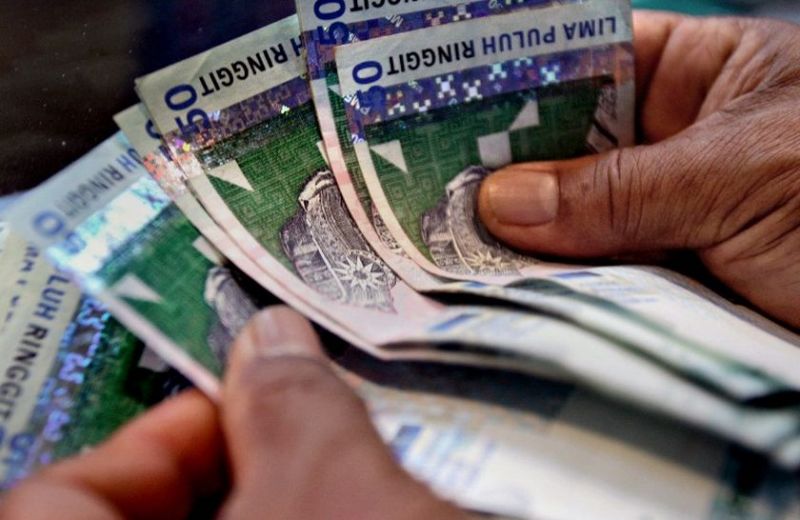
Under PEMULIH, the government will provide additional assistance under Prihatin Special Grant (GKP) 4.0 and give micro SMEs one-off payments.
KUCHING: In uncertain times such as these, having financial aid is a booster in the arm for businesses to survive, especially when the Covid-19 pandemic has persisted since March last year.
Thus, it was timely for the financial aid announced by the government under the National Peoples Well-Being and Economic Recovery Package (PEMULIH) worth RM150 billion, with a fiscal injection of RM10 billion, following the extension of the first phase of the National Recovery Plan, where the full movement control order (MCO) remains in force and economic activities are greatly curtailed.
Prime Minister Tan Sri Muhyiddin Yassin said the stimulus package outlined several measures targeted at supporting the business sector, given that many business premises are not allowed to operate under the current full MCO.
The aim is to reduce costs borne by employers, encourage digitalisation efforts, as well as provide financial support and tax incentives, Muhyiddin said.
Under the new stimulus package, the government will be providing additional assistance under the Prihatin Special Grant (GKP) 4.0 programme, and give micro SMEs one-off payments of RM500 in September and another RM500 in November 2021.
Sarawak Business Federation (SBF) welcomed the PEMULIH plan to mitigate the impact of the continued total lockdown measures.
Jonathan Chai
Secretary-general Jonathan Chai believed the measures introduced under the PEMULIH package would support businesses and the public at large to cope with their financial difficulties during this pandemic crisis.
“In particular, the provision of the Wage Subsidy Programme 4.0 and the automatic extension of the loan moratorium will definitely help to ease the cash flow of the businesses, especially the small and medium enterprises (SMEs),” he said.
In addition, Chai said SBF applauded the commitment and efforts of Bank Negara Malaysia (BNM) to provide access to financial assistance to SMEs.
“As reported, there is still an existing balance of RM6.6 billion out of the total RM25.1 billion provided by the central bank for the benefit of new applicants.”
Under the PEMULIH package, Chai said BNM will provide an additional RM2 billion to bring the remaining fund amount to RM8.6 billion.
“SBF hopes that this fund would be able to meet the various needs of SMEs and micro-entrepreneurs in easing cashflow constraints of their businesses during this challenging time,” said Chai.
Sulie Abell
Echoing the same sentiment is business owner Sulie Abell.
The founder of Sarawak-based Sluvi Cosmetics said measures such as the moratorium and wage subsidies was of great help for SMEs’ survival at this point.
Sulie earlier commented that since the FMCO was extended, SMEs were worried as to how they could continue to survive.
“As an entrepreneur, I find there were very few initiatives that can be enhanced to sustain Malaysian businesses, especially SMEs,” she said.
“The moratorium frees more money for SMEs’ sustainability, especially in our critical situation now,” she told The Borneo Post. “The wage subsidy also helps greatly as employers can still keep their workers.”
She also lauded the government for extending the 10 per cent discount on electricity bills for those operating in affected economic sectors by another three months — from October to December.
Charles Liew
Founder and chief executive officer of SHiNE Pharmacy Sdn Bhd, Charles Liew, who recently invested in a new pharmacy branch in Kuching, strongly believed more can be done when it comes to financial aid for businesses.
“With assistance dwindling after each aid package announcement over the last 15 months, understandably, the government is trying to be conservative considering the country does not have a bottomless pit when it comes to funds in reserve.
“However, I think it is important that the government does not try to merely do its job by sprinkling a bit of assistance here and there, and here is why, economically speaking – every bit of financial help actually means injecting money straight back into the economy, simple as that.
“To jump start the economy again means to create a big enough multiplier effect by way of huge spending by everyone within the economic loop, and if the government releases more money into the hands of the people, that actually helps the government as much as it helps the people.”
“Allow me to encourage fellow business owners out there: tough times can make or break us – let these tough times make us! Let this pandemic mould and shape our businesses to be strong and resilient.”