

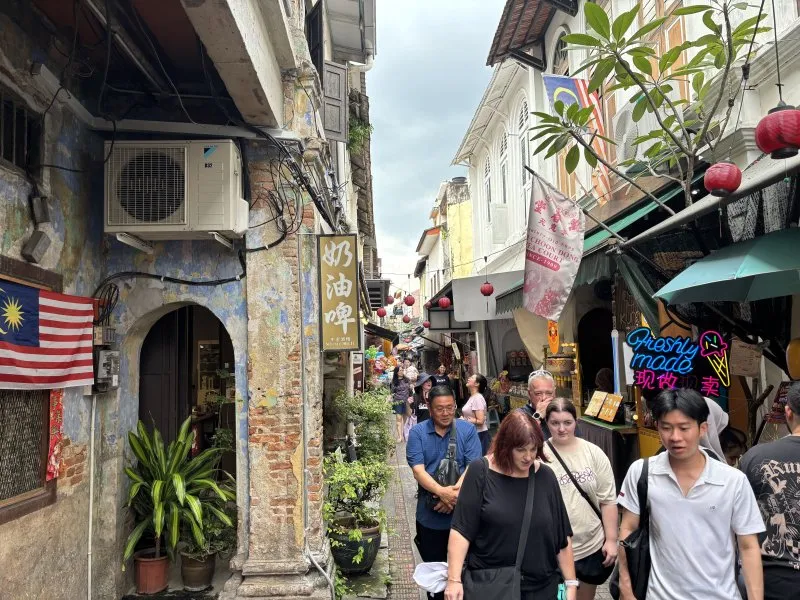
Tourists visit Concubine Lane in Ipoh, Perak, where the inaugural Ipoh Festival aims to encourage visitors to explore what the city has to offer. — Picture by John Bunyan
Stay updated on the latest news and insights. Subscribe to our newsletter here
 Make Malay Mail your preferred source on Google Giving you news that matter to Malaysians. Make Malay Mail your preferred source when you search for news on Google.
 Giving you news that matter to Malaysians. Make Malay Mail your preferred source when you search for news on Google.
IPOH, Nov 29 — For visitors travelling from Kuala Lumpur and Penang to the inaugural Ipoh Festival, here are some options on fares, travel times and parking to help you plan your trip.
Running from November 27 to December 19, the festival will turn Ipoh’s Old Town into a cultural and creative hub, with performances, art exhibitions, traditional craft showcases and community activities taking place at cafes, galleries, heritage buildings and public spaces.
Unlike conventional festivals concentrated at a single venue, visitors will have to move between participating locations, making transport and parking an important part of planning a visit.
Here are some options to consider when planning your trip to the Ipoh Festival:
Train
The Electric Train Service (ETS) is among the most convenient options for visitors travelling from Kuala Lumpur and Penang, as Ipoh Railway Station is located close to the Old Town heritage district.
From the station, visitors can walk for approximately 10 to 20 minutes to reach Jalan Bijih Timah, Tin Alley, Ipoh Padang, Lorong Seni, People’s Park Chang Jiang White Coffee, Chakori and Little India, where many of the Ipoh Festival programmes are expected to take place.
ETS Express services from KL Sentral to Ipoh Railway Station take about two hours, while Platinum and Gold services generally take between two hours and 20 minutes and two hours and 35 minutes.
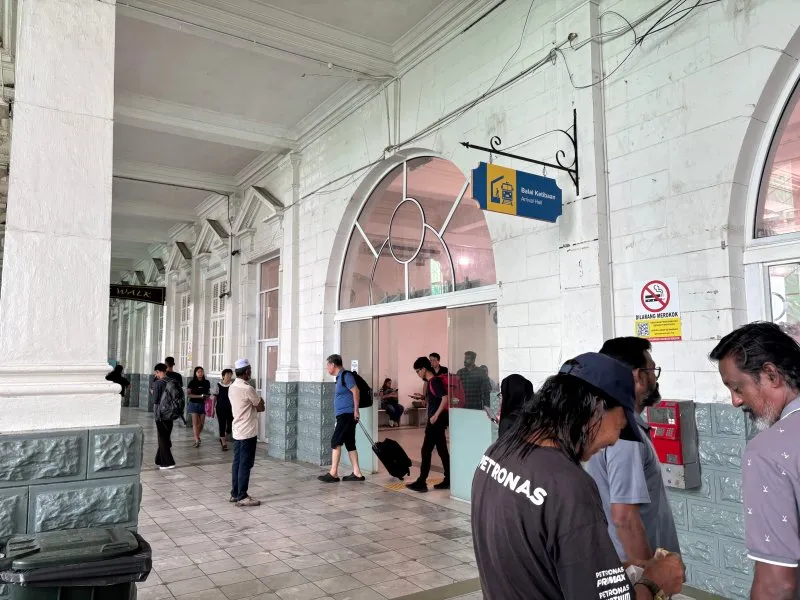
Passengers arrive at Ipoh Railway Station, about a 10-minute walk from Ipoh Old Town, where many Ipoh Festival events take place. — Picture by John Bunyan
Estimated one-way fares range from RM35 to RM68, depending on the service and booking date.
Meanwhile, ETS services from Butterworth to Ipoh generally take between one hour and 40 minutes and two hours.
Fares range from RM33 for ETS Gold to RM42 for ETS Platinum, while ETS Express services are priced slightly higher, at around RM3 more than Platinum.
Exact fares may vary depending on the departure time, peak and off-peak demand and booking platform fees.
Bus
Express buses offer a cheaper alternative for those travelling from the Klang Valley, with services departing from Terminal Bersepadu Selatan (TBS), KL Sentral and Hentian Duta to Terminal Amanjaya in Ipoh.
The journey generally takes between three and three-and-a-half hours, with one-way fares starting at approximately RM19 and commonly ranging between RM20 and RM33.
However, visitors should factor in additional travel time and costs to get from Amanjaya, which is outside the city centre, to Ipoh Old Town.
Meanwhile, express buses from Penang Sentral in Butterworth to Terminal Amanjaya offer another affordable option, with fares generally ranging from RM16 to RM26 and journey times of approximately two to two-and-a-half hours.
Visitors travelling from George Town can take the ferry across to Butterworth before continuing to Penang Sentral, while those arriving at Amanjaya can take an e-hailing ride into the city centre.
The journey from Terminal Amanjaya to Ipoh Old Town typically takes another 15 to 20 minutes by car, depending on traffic.
Car
Those travelling by car from Kuala Lumpur can use the North-South Expressway (PLUS) northbound towards Ipoh, covering approximately 205km in about two to two-and-a-half hours under normal traffic conditions.
For a Class 1 vehicle, the toll from Jalan Duta to Ipoh is approximately RM21.73 one way, while fuel could cost another RM35 to RM50, depending on the vehicle and fuel consumption.
This brings the estimated one-way driving cost to around RM57 to RM72, excluding additional tolls within Kuala Lumpur.
Meanwhile, visitors driving from Penang can use the North-South Expressway (PLUS) southbound towards Ipoh.
The journey from George Town to Ipoh takes approximately two to two-and-a-half hours, depending on the starting point and traffic conditions.
The toll between Penang and Ipoh for a Class 1 car is approximately RM19.52 one way via the North-South Expressway (PLUS) and Penang Bridge, depending on the exact entry and exit plazas.
Fuel could cost another RM30 to RM50, depending on the vehicle and fuel consumption.
Parking
Parking could be limited around areas where the Ipoh Festival programmes are being held, but visitors have several alternative options.
One option is the basement parking facility at Urban Transformation Centre (UTC) Perak and the multi-level car park at Pasar Ayam Amanjaya Ipoh.
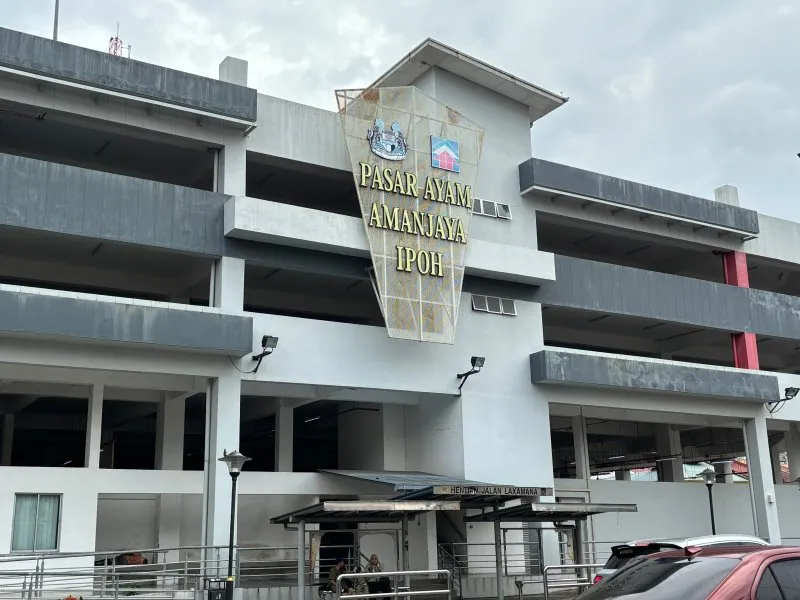
Visitors driving to the Ipoh Festival can use the multi-storey car park at Pasar Ayam Amanjaya Ipoh, about a 10-minute walk from Ipoh Old Town, where many festival events take place. — Picture by John Bunyan
Both are located next to each other and operate 24 hours daily, costing RM0.60 per hour and capped at RM4 per day from 6am to 6pm, or RM2 per entry overnight from 6pm to 6am.
A newly constructed pedestrian bridge over Sungai Kinta near Hugh Low Street allows visitors to reach Ipoh Old Town from these parking areas in less than 10 minutes on foot.
Those looking to park closer to the festival’s Old Town venues can consider the open-air parking area at 22, Jalan Tun Sambanthan or the multi-level car park located along 22 Hale Street Heritage Gallery, as well as private parking spaces at several lots within Ipoh Old Town.
Parking rates may differ at each location.
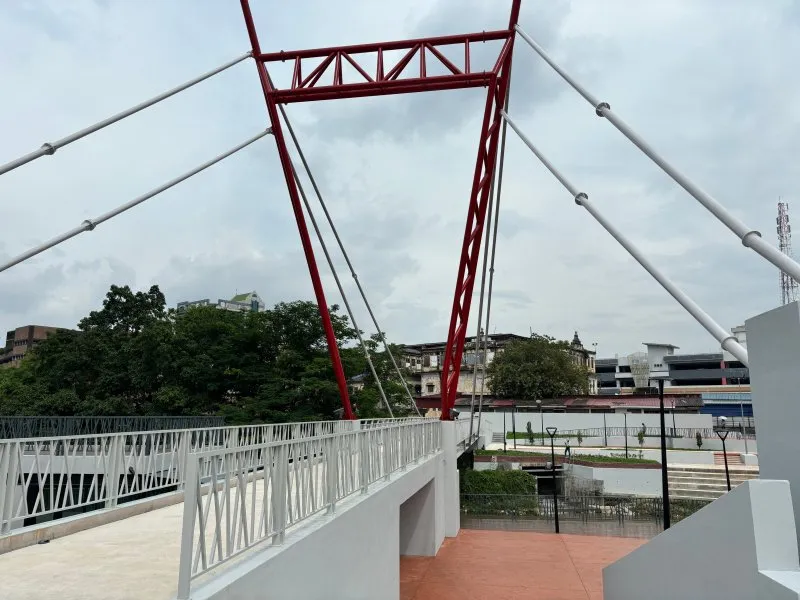
The pedestrian bridge over Sungai Kinta near Hugh Low Street is designed to give visitors parking near UTC Perak a walk of 10 minutes or less to Ipoh Old Town, where many Ipoh Festival events take place. — Picture by John Bunyan
For on-street parking, motorists are encouraged to download the Park@Perak or Flexi Parking applications, which are among the payment options recognised by the Ipoh City Council (MBI).
With several festival activities within walking distance of one another, visitors may find it more convenient to park once and explore the participating venues on foot rather than repeatedly moving their vehicles through the narrow heritage streets.