


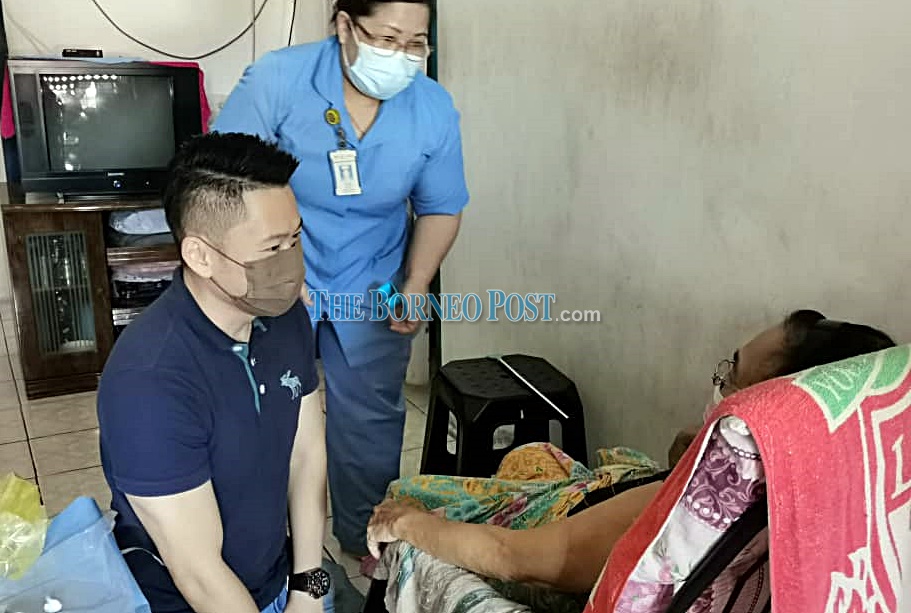
Dr Chung (seated left) talks to a bedridden patient before she was given the jab.
BINTULU (July 12): The Bintulu Health Office (PKB) has deployed a house-to-house mobile vaccination team which will be focusing on the disabled (OKU) and bedridden patients.
This initiative by PKB Bintulu was to ensure no vulnerable individuals would be left out from getting Covid-19 vaccination especially to those who were unable to go to the vaccination centre (PPV) due to their illness.
Yesterday (July 11), ten bedridden patients from Rumah Engkabang KM14 Jalan Bintulu-Miri and housing areas around Bintulu received their jabs.
This mobile vaccination programme received the cooperation from Bintulu MP Service Centre and other non-governmental organisations (NGOs).
Bintulu MP Datuk Seri Tiong King Sing said the programme would be expanded to the other areas within Bintulu including Sebauh, Tatau and Jepak in stages using three approaches namely by land, water and flying doctor service for people in the interior.
“I would like to thank Bintulu Division Health officer Dr Melvin Chung Hsien Liang who led the programme for the initiative to provide Covid-19 vaccination to the bedridden patients and OKUs,” he said.
According to Tiong, a regional vaccination programme in high-risk areas has successfully inoculated a total of 2,712 residents in Sungai Plan area and 845 people in RPR Kidurong area so far.
He said despite the difficulties in carrying out the house-to-house vaccination programme, the health personnel still go to the ground to give the Covid-19 jabs to the vulnerable individuals and they will return in three weeks to complete the second dose of vaccine.
“For those who are physically healthy, please register and go to the vaccination centre, do not take advantage of this vaccination programme,” said Tiong.
He said although the vaccination programme in Bintulu is in full swing with the daily positive cases declining, the people should remain vigilant at all times.
“The relevant authorities are still tracking down the suspected cases with an average daily screening of about 2,000 people.
“Continuous tracing is one of the most important aspects in our fight against this pandemic,” he added.