


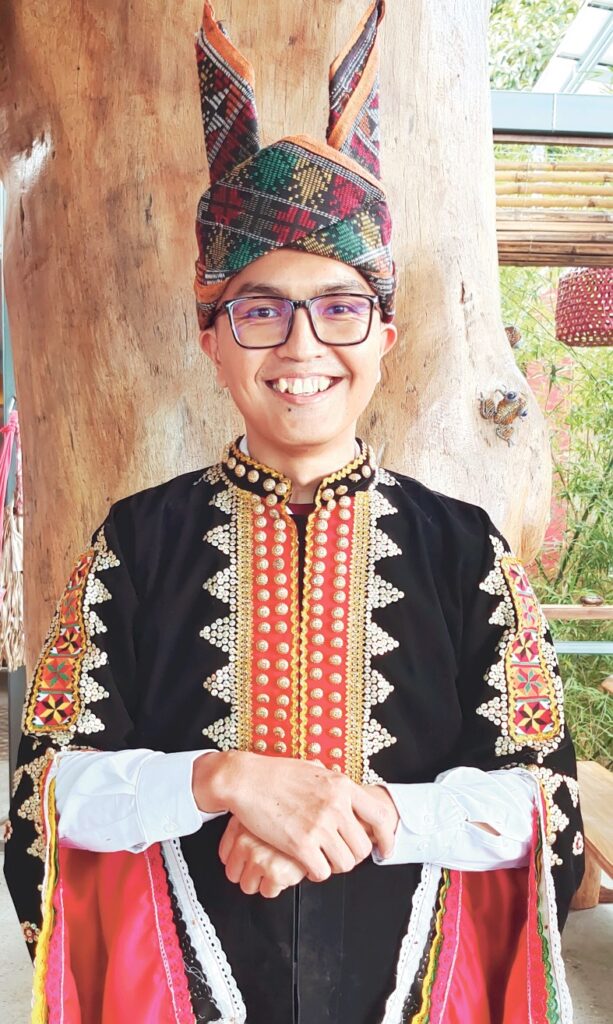
THE celebrations of Kaamatan this May 30 and 31 by the Kadazan-Dusun communities in Sabah, and Gawai Dayak on June 1 and 2 in Sarawak, are set to mark the end of yet another harvesting season.
Behind these celebrations are countless stories waiting to tell the uniqueness of the culture, heritage and legends among the communities in Borneo. To preserve the significance of such treasures, Maxis launched #MenuaiKisah, a campaign that centres on passing these unique stories to future generations through a little help from technology.
In collaboration with the communities in Borneo, the telecommunications group shared stories about Borneo’s heritage and culture — ranging from language, clothes and traditional food — that forms the essence of these festive celebrations.
Pison Jaujip
According to Sabah-born food educator, Pison Jaujip, the Kaamatan festival is celebrated as a show of respect and gratitude to the spirit of “Bambarayon”, believed to be present in every grain of paddy, for a bountiful harvest; and also to foster unity and stronger kinship amongst the ethnic groups of Kadazan-Dusun, Murut and Rungus (KDMR).
‘Through the Maxis #MenuaiKisah campaign, I got to share my Facebook page, named “Ropuhan di Tanak Wagu” with more people,’ Pison said, in regards to the videos he has posted about staple KDMR traditional food recipes.
‘I realised that by sharing my traditional recipe videos, many of my followers also shared their own stories and started reminiscing about the meals they had with their families.
If possible, I would like to preserve all the cultural practises and traditions of the KDMR community, such as speaking our mother tongue, cooking our traditional food, preserving our stories and legends, and our traditional costumes, among other things.
Because if not us, who else would continue these traditional practises and heritage? Beyond Kaamatan, they should be practised in our daily lives as well,’ said Pison.
Pison described Kaamatan as the best time to remember the traditional food served in the past and to share the recipes with the younger generation.
‘For this year’s Kaamatan festival, I would like to share with our followers the recipe of Linopot Linangatan Guol – or more familiarly known as Nasi Keladi Bungkus. In Sabah, Linopot Linangatan Guol is a classic KDMR way of cooking rice. It is one of the delicacies not to be missed during this festive season.’
Mayabayu
Just like how Pison was able to connect with his followers through the sharing of traditional recipes, singer-songwriter Mayabayu also managed to attract the attention of netizens through her unique songs that were inspired by Kadazan-Dusun poems.
She said her song “Hinsou”, which means seed, was specially composed for Maxis’ #MenuaiKisah campaign. It is a song that describes the beauty of Sabah, from the landscapes to its people, especially during this festive season.
A descendent of Sino-Kadazan lineage, Mayabayu said the composition of the song incorporated the tunes from a number of traditional musical instruments found in Sabah, such as the sundatang, suling, sompoton and the kulintangan.
‘The song was based on a Kadazan-Dusun poem that I learned from Dr. Rosliah Kiting, whom I actually looked up on Facebook. It was then that I discovered that Kadazan-Dusun poems are usually laid with sophisticated melodies. There are over 70 types of melodies in Kadazan-Dusun poems, among them are the Sudawil, the Talaala, the Sundait and the Surolo.’
Mayabayu strongly feels that through this approach, Kadazan-Dusun poetry could be preserved and kept alive. She is in the process of recording a few songs based on the numerous poems written by Dr. Rosliah, and she would soon share the songs via her social media platforms.
‘Despite not being able to celebrate Kaamatan this year, I’m grateful that I can stay connected with my family back in Sabah through video calls. I’m also grateful, and surprised, that I could work with Maxis on the #MenuaiKisah campaign with my song, “Hinsou” too!’
Genevieve Gerald Wilson
Meanwhile, Sarawak native Genevieve Gerald Wilson recalls how her Iban community would usually gather in their longhouses and visit one another during Gawai Dayak.
She said many traditional dishes such as nasi buluh (bamboo rice), kasam (fermented fish), and tuak (rice wine) would be served throughout the day until late at night during the celebration. She even added that the “Kumang Gawai”, a traditional beauty pageant synonymous with the Iban community, would be held to make the festival more exciting.
Genevieve pointed out that the Iban customs and traditions observed during the Gawai celebration must be protected, especially by the younger generation, as it reflects on their identity as one of the Bumiputera ethnic groups in the country.
‘Although I was brought up in a city, the Iban culture still lives inside me. Despite not being able to fully celebrate the festivity in the past two years, I am still grateful for being able to stay in touch with my close friends and relatives via WhatsApp and video calls,’ said Genevieve.
Helen Untet
Helen Untet, however, felt that the younger generation seemed to not understand the true meaning of a Gawai celebration.
‘We must teach our children so they will pass down the tradition to the future generations,’ she said. Helen, who is a Bidayuh, said the younger generation should be proud of the uniqueness of the Gawai festival because it signifies a thanksgiving occasion for the Dayak community for their hard work after a long harvest.
‘I vividly remember my mother’s advice and the traditions I have inherited. We must try to understand the significance of the traditional practises of the past and why we need to incorporate it into our daily lives.
The most cherished moment would be spending time with my mother in the kitchen, preparing all the festive delicacies. Among the delicacies served during Gawai is the kuih jala – a sweet, brittle treat prepared using traditional tools made from wood.’
Helen said despite the COVID-19 pandemic, this year’s Gawai could still be celebrated – thanks to the availability of video calls and WhatsApp that could connect families with their loved ones, especially children staying far away from home.
To check out the videos and know more about Maxis’ #MenuaiKisah campaign, visit maxis.com.my/menuaikisah.